
The Ultimate Guide to Choosing a School Lunchbox (From 10+ Years of Trial and Error)
School is back in session soon, and if you’re a parent, you know the struggle: whether you send hot lunch or cold foods, figuring out the right kind of container ends up mattering a lot. Sure, the latest character lunchboxes look cute on store shelves, but they’re often too small or don’t fit the variety of healthy foods needed to sustain school going kids.
After more than 10 years of packing lunches for my own kids, here’s all I’ve learned – the wins, the returns, and the things I wish someone had told me on day one of kindergarten!
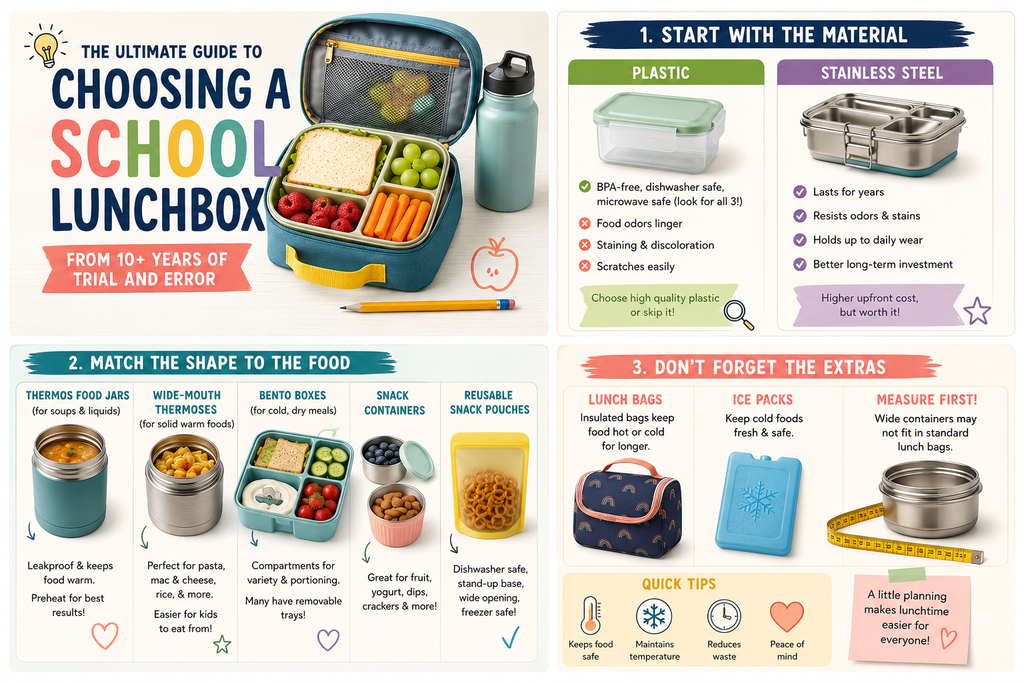
Kids Lunch Box Material Matters
The material of your kids lunchbox affects everything from food safety to how durable it is.
Plastic: I generally avoid plastic lunchboxes unless they’re genuinely high quality, meaning BPA-free, dishwasher safe, and microwave safe. If you do go with plastic, don’t just trust the label. Check reviews specifically for quality and food safety, and look for any experiences of microplastic shedding.
A few red flags with cheap plastic containers:
- Food odors. I’ve returned brand-new lunchboxes because the plastic absorbed food smells after just one or two uses. Or even worse, the food smelled of plastic!
- Staining and discoloration. A good lunch box should not discolor from food (looking at you tomato sauce and turmeric curries) or from repeated dishwasher cycles.
- Scratching. If forks and knives scratch the surface easily, that’s a sign of low grade plastic. These scratches can harbor bacteria over time and are a nightmare to clean.
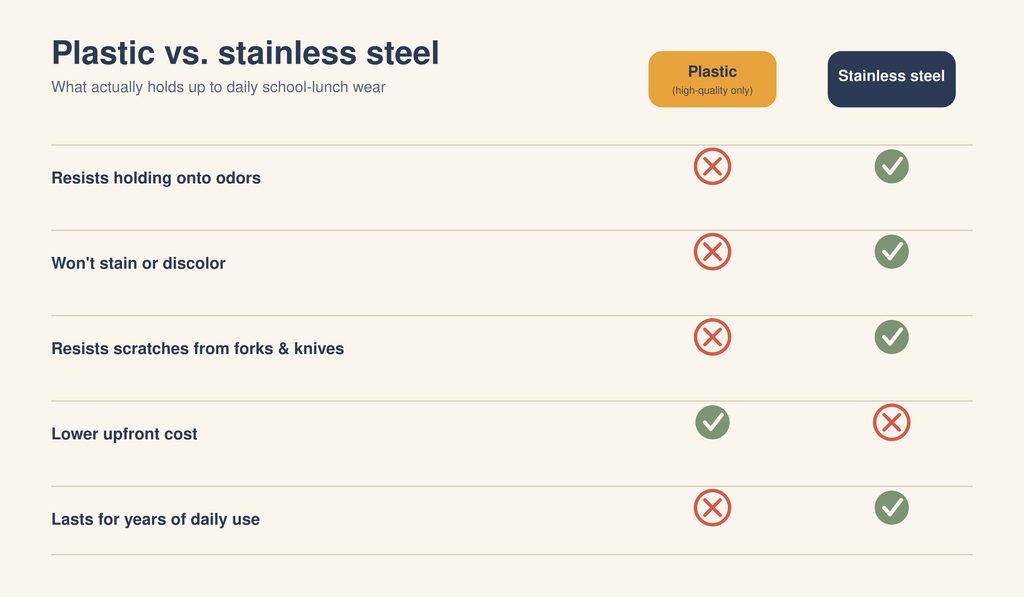
Stainless steel: More expensive upfront, but steel lunchboxes last significantly longer than plastic, resist odors and staining, and hold up much better to daily use. If you’re only buying one “good” lunchbox this year, steel is usually worth your money and a better long-term investment.
School Lunchbox is NOT one size fits all
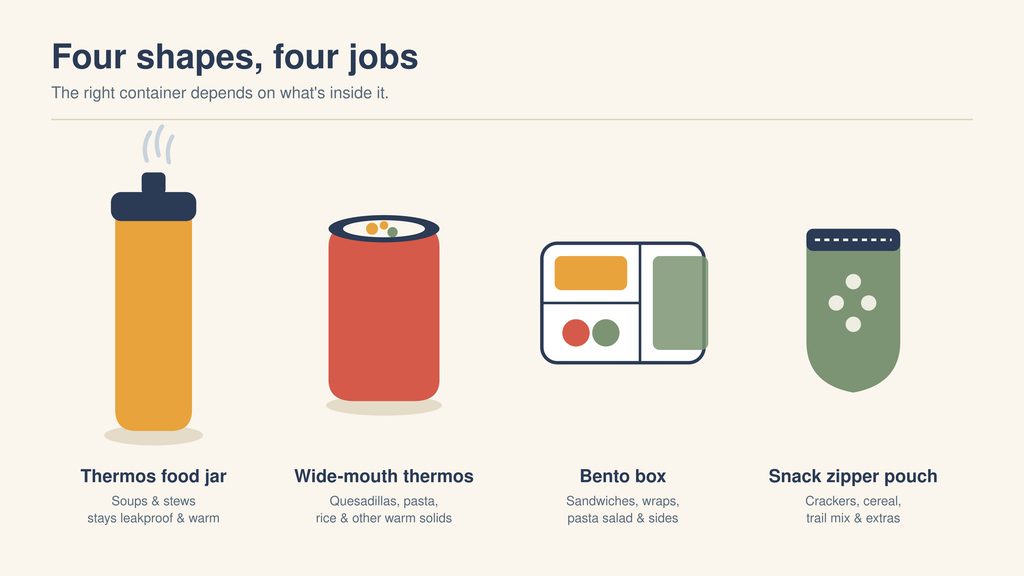
This is the part most parents don’t think about until they’re standing in the aisle overwhelmed by options. Different shapes exist because different foods need different containers.
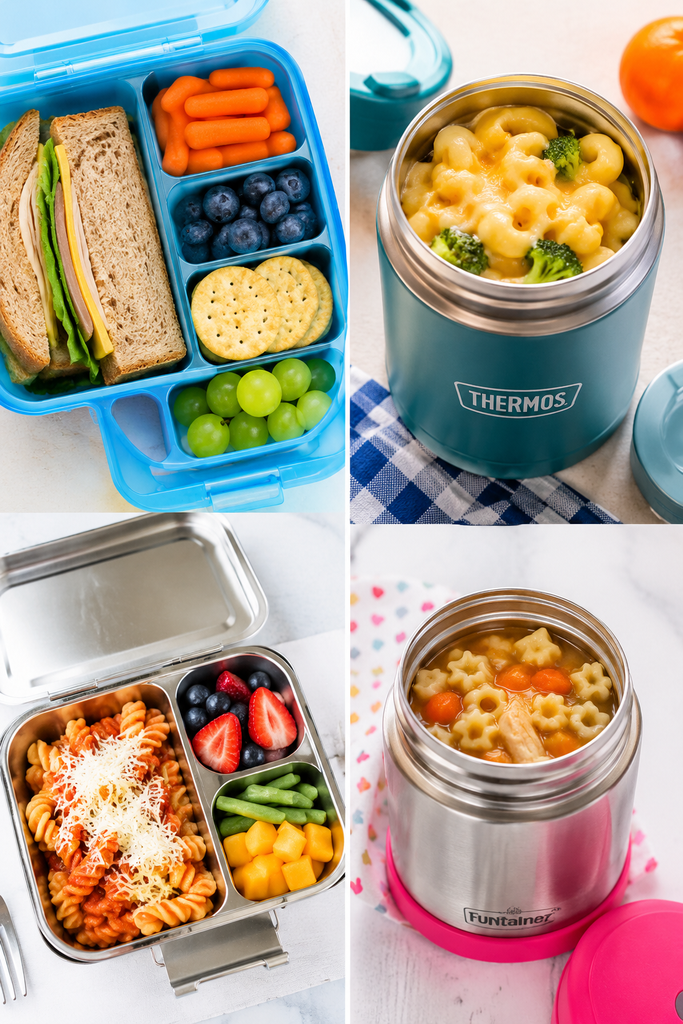
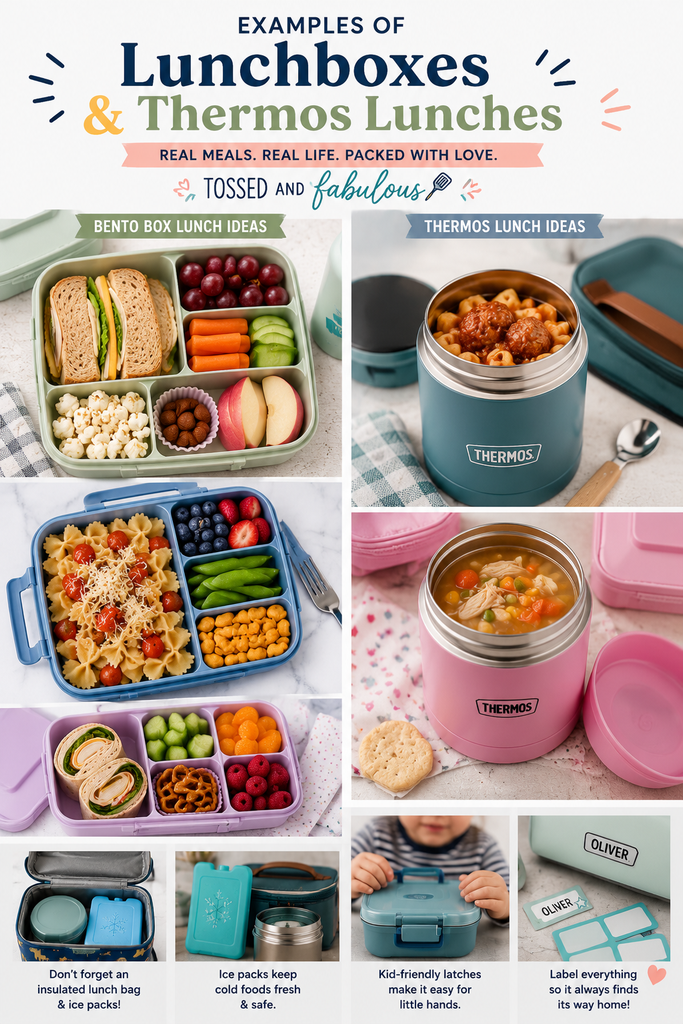
Thermos food jars are ideal for soups, stews, and other liquid-based meals. A good one is leakproof and keeps food warm until lunchtime.
Pro tip: To maximize heat retention, preheat the thermos before packing. Fill it with boiling water and let it sit for about 15 minutes, then dump the water, wipe it dry, and add your hot food. Preheating the interior walls of the container helps the food stay warm much longer than if you pack straight into a cold, empty thermos.
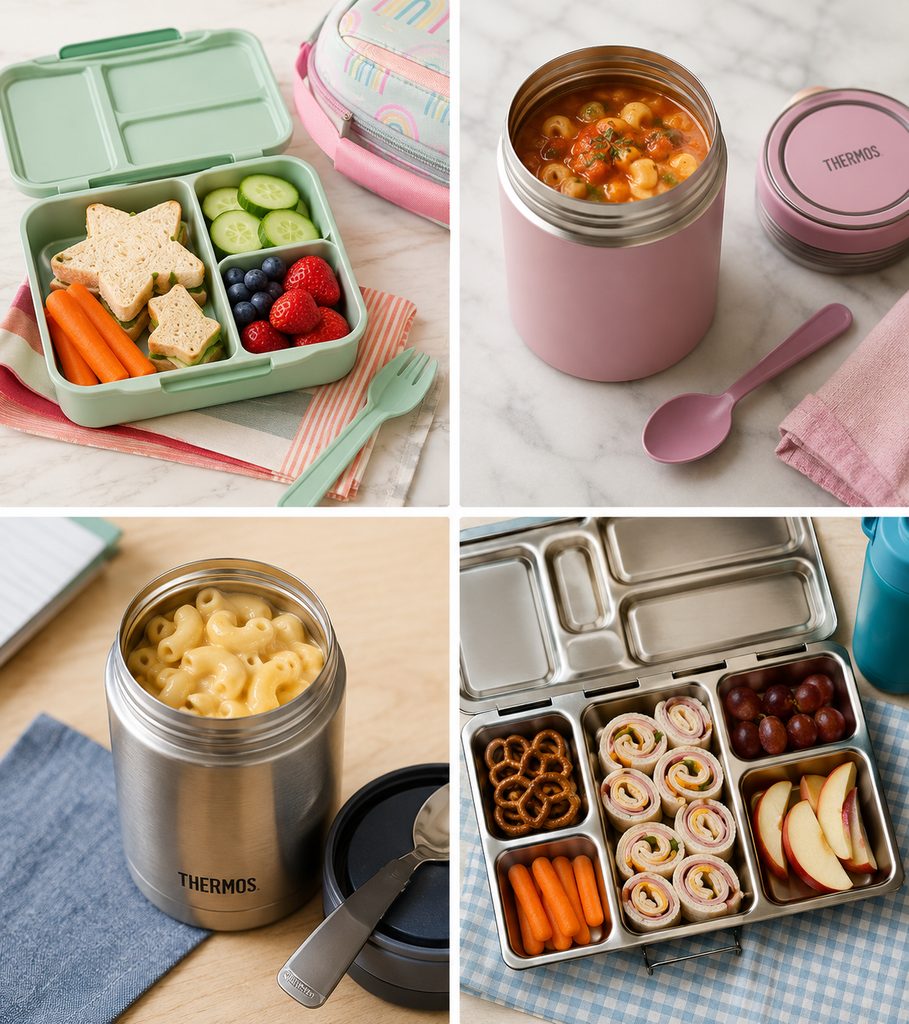
Wide-mouth thermoses are great for solid warm foods like quesadillas, pasta, mac and cheese, or rice dishes. The wide opening makes it much easier for kids to actually reach their food with a spoon or fork, instead of fishing around in a narrow opening.
If you’re shopping for these online or in stores, useful search terms include: “wide mouth thermos,” “thermos lunch box for soup,” or “casserole serving bowl for kids.” One thing to know: these wider, rounder containers often don’t fit into standard kids’ lunch bags, so you may need to buy a separate insulated bag sized to fit them.
Bento boxes are best for dry, cold meals like sandwiches, wraps, pasta salads, and similar foods. They’re typically designed with kid-friendly latches that are easy for small hands to open. The built-in compartments make it simple to portion out a main item, veggies, fruit, and a small treat, all in one box.
Many bento boxes also have a removable inner tray, so you can take it out if you want to use the whole box as a single large compartment. They come in both plastic and steel versions, so you can apply the same material guidance from above when choosing one.
Small snack containers are worth having a few of on hand too – for things like cut fruit, yogurt, dips, or crackers that don’t belong in the main box. Silicone or steel snack cups are a good pairing with a bento box, since you can swap them in and out without needing to buy a whole new lunch system. Make sure you get one with leakproof lid.
Reusable snack zipper pouches are a great addition for things like crackers, pretzels, cereal, or trail mix – anything you’d normally reach for a disposable plastic baggie for. Look specifically for ones labeled dishwasher safe; not all silicone pouches are, and washing by hand every day gets old fast. A few things to check before buying:
- Dishwasher-safe and food-grade silicone (top-rack is common, but some brands are safe on the bottom rack too).
- A wide, flat-opening zipper seal so kids can self-serve without needing help, and so crumbs don’t get stuck in the seal track.
- Stand-up base so the pouch doesn’t tip over and spill in the lunchbox or bag.
- Freezer-safe if you like to pre-portion snacks in bulk and freeze them ahead of time.
They’re compact, cut down on single-use plastic bags, and tuck easily into any leftover space in a bento box or lunch bag – making them one of the most useful “extra” pieces to have a few of on rotation.
Don’t Forget the Lunch Bag and Ice Packs
A great lunchbox is only half the equation – how it travels matters too.. especially if your kid travels on the school bus and spends 20 minutes in the commute!
- Insulated lunch bags help maintain temperature (hot or cold) for several extra hours, especially important if your child’s school has an early lunch period or the bag sits in a locker or cubby before lunchtime.
- Ice packs are essential for cold items like yogurt, cheese, or deli sandwiches, especially in warmer months. A slim, contoured ice pack that fits alongside the lunchbox works better than a bulky one that takes up all the room.
- If you’re using a wide-mouth thermos or bento box that doesn’t fit a standard bag, measure the container before buying a bag – this is a common mistake that leads to returns.
Pack jut enough food for your Child’s Age and Appetite
In general, when it comes to kids lunch boxes under packing is better in elementary when kids eat slow and appetites are not big; while overpacking is preferred in junior high and high school for growing appetites and kids wolfing down food whenever they’re free.
- Younger kids often do better with smaller, simpler compartments and fewer components to manage.
- As kids get older (and hungrier), you may need to size up or add a second small container rather than trying to cram more into the same box.
- If your child consistently comes home with food untouched or asks for more, that’s often a sign it’s time to adjust portion sizes or the container itself – not just the lunch menu.
Practice Before the First Day
Test any new lunchbox at home before it makes its school debut especially for kids under 10:
- Leak test thermoses and liquid containers by filling with water and leaving them upside down for a few hours.
- Have your child practice opening and closing it themselves – latches, lids, and thermos caps can be surprisingly tricky for small hands, and you don’t want the first attempt to happen at school.
- Run it through the dishwasher once to confirm it holds up before relying on it daily.
Label Everything
Lunchboxes, thermoses, and ice packs are among the most commonly lost items at school. A label with your child’s name (or an initial, if the box is shared with a sibling) saves you from having to replace lost or mixed-up pieces mid-year. Reusable label stickers or a permanent marker on the underside both work fine.
Good Brands Worth the Investment
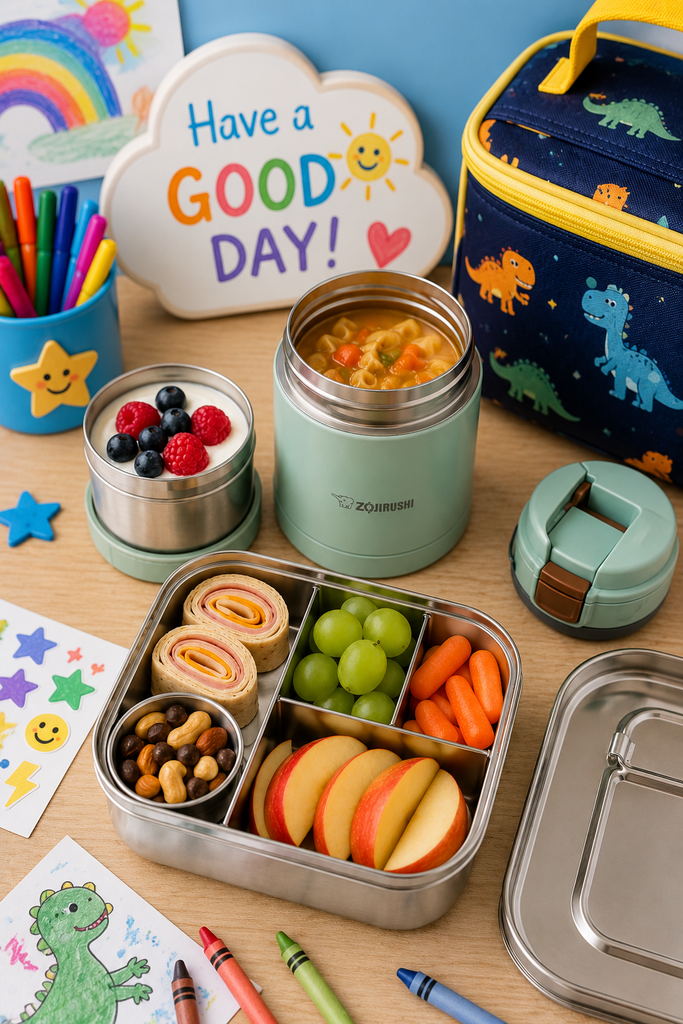
As with most things, spending a bit more upfront usually means the lunchbox lasts longer. One brand I keep coming back to is Zojirushi. They offer a wide range of shapes and container combinations, and their build quality is excellent. Their lunchboxes are on the heavier side, and there can be a small learning curve for little kids to open them independently – but the durability and heat retention make it worth it.
Other well-regarded brands to look into if you’re comparison shopping: LunchBots, PlanetBox, and Thermos brand (the original), all of which offer steel options in various sizes.
Packing school lunches is a daily task for the better part of a decade, so it’s worth taking a little extra time upfront to get the system right. The right combination of materials and shapes makes mornings faster, cuts down on food waste, and – most importantly – means your kid actually eats what you packed.